Day one of Iran’s newest uprising did not arrive with a manifesto or a televised address. It arrived in Iranian style: shutters rolling down, fluorescent lights switching off, and commerce refusing to perform its usual daily routine.
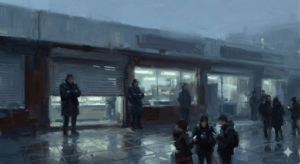
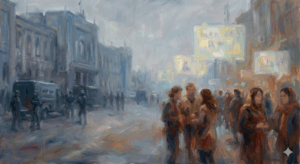
In parts of central Tehran on 28 December 2025, merchants at Alaeddin and Charsou, two flagship malls in the capital’s electronics district, closed their shops. Where phones and laptops normally change hands at speed, rows of locked storefronts turned into a silent, collective message: we will not sell our way through this collapse. Videos circulated showing small crowds gathering outside, filming the shutdown and chanting as the currency hit record lows.
The spark: a number that eats a life
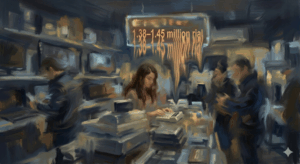
This time the trigger was economic. The rial slid to around 1.38–1.45 million per US dollar on the open market, rising almost %50 over three months. This exchange rate that not only signal economic stress, but also a kind of social vertigo. Inflation, which already had been grinding households down, rose again. Data attributed to Iran’s Statistical Center placed headline (annual) inflation at about 42.2% for the period ending late December, while point-to-point inflation was reported even higher in the same reporting cycle.
For shop owners, this is not an abstract macroeconomic storyline. It is arithmetic with a pulse: buy stock in dollars, sell in rials that lose value by the day, and work harder only to fall further behind. “Business” becomes a treadmill set to sprint. There is also growing frustration with buyers’ declining purchasing power, as many can no longer afford basic merchandise. This is compounded by market instability and, under sanctions, the lack of access to credit cards and formal financing, making it difficult for businesses to attract investment or sustain normal commercial activity.
Woman, Life, Freedom never ended
From the very first day, people were not describing an “economic crisis” as a technical matter. They were describing the collapse of human security, the basic ability to feed a family, access medicine, pay rent, and imagine a future without permanent emergency.
But there was something else running underneath the numbers: the unmistakable continuation of the Woman, Life, Freedom revolution. What began in 2022 as women’s refusal to submit, refusal to be governed through fear, coercion, and forced conformity, did not disappear when the street temporarily quieted. It diffused. It taught a political language of courage that could travel from the body to the household, from the classroom to the workplace, and now into the marketplace. The insistence on dignity became contagious. It became a social posture, standing up, staying unbroken, refusing the regime’s demand for silence.
That is why the shutdowns were never “only about the economy.” They were about legitimacy. A central, long-standing fact of the Islamic Republic has been its inability to persuade a large portion of Iranian society, across generations, that its model of rule is morally credible or socially representative. This legitimacy deficit is structural, and it is one of the regime’s most enduring vulnerabilities. Economic collapse simply accelerates what Woman, Life, Freedom already made visible: a widening gap between what the state demands (obedience, endurance, submission) and what society increasingly insists on (dignity, accountability, freedom).
When a currency collapses, insecurity spreads in layers: at first savings evaporate in purchasing power. Then imported medicines and medical equipment become punitive or unavailable. Rent and housing costs surge against wages that cannot keep up. Thus, parents have to cut back quietly: fewer groceries, no extracurriculars. And what follows is the social emotions of collapse: anxiety, depression, shame, and a grinding humiliation, especially for young people who already feel locked out of stable jobs and dignified futures.
The geography mattered: commerce as politics
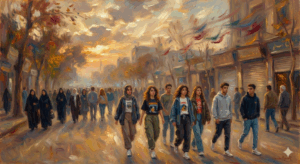
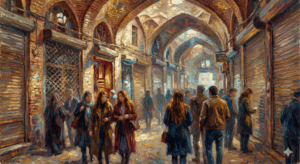
Day one clustered around places that are historically political. Commercial hubs like the electronics district and the bazaar ecosystem carry a symbolic weight in Iran’s modern history. When merchants close, they are not only responding to a bad rate but also making a public calculation about legitimacy.
The bazaar matters because it signals something larger than a single constituency. The anger was no longer limited to the groups the state has learned to stereotype and preempt including students, activists, unionist and journalists. It was moving into segments the system often has treated as its ideological, religious and political ally.
The state’s first response: familiar framing, quiet force
The government’s initial posture mixed caution with a familiar explanatory script: hardship as the product of external pressure, sanctions, and “rumors” spread by enemies to destabilize market confidence. Meanwhile, security presence in key areas was reported early, with accounts of crowd control measures as gatherings grew.
Even when the state promises “stabilization measures,” the street hears something else: delay, insulation, and distance. A gap opens between official language of control, management, and patience verses the lived experiences of panic, loss, no way out that people experience. On the street and across social media, many accounts pushed back hard against a purely “external pressure” narrative. The recurring diagnosis was domestic: corruption, mismanagement, and elite immunity. The anger is not only that life is expensive. Decisions about budgets and national priorities feel sealed off from public scrutiny. Ordinary people are asked to “endure” indefinitely while officials enjoy luxury lifestyles and endless off- shore accounts. Those with proximity to power are insulated from the costs of the decisions that the state makes. Economic pain, in this framing, is a governance outcome and people are well aware of the state’s mismanagment of Iran’s natural wealth and human resources.
Beyond Tehran: the early signal of uneven development
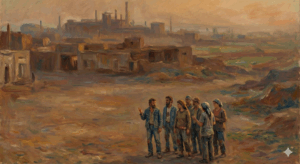
Even on day one, reporting suggests that unrest and solidarity actions are not confined to the capital. The significance of this is structural: for many provincial centers, long shaped by lower investment, fewer job opportunities, and persistent neglect, the currency crash is the latest blow in a long chain of shocks. When people in those regions join demonstrations, they are not protesting a single economic shock caused by exchange rate. They are protesting a pattern of economic hardship. This is a conflict that is triggered by economic instability but soome becomes national because it demonstrates a deeper geography of inequality.
The Day One contains the core tension that will likely shape every subsequent day. A state top-down narrative that attributes hardship primarily to foreign pressure, and a people-centered bottom-up reality in which they experience insecurity as the compound result of domestic governance and diplomatic failures. This round of demonstrations is a public referendum on legitimacy and on accountability. It is determined that the existing political-economic religious model cannot deliver something as basic as human security.
Images in this post are generated by Banana pro
